Night Sky Wonders: Exploring the Celestial Canopy
The night sky has fascinated humanity for millennia, serving as a source of wonder, navigation, scientific inquiry, and inspiration. Even with the naked eye, the sky overhead unveils a tapestry of stars, planets, and phenomena—each with its own story and significance. This guide explores how to observe the night sky, what celestial objects are visible, tips for amateur astronomers, and the enduring impact of skywatching throughout history.
How to Observe the Night Sky
Anyone can appreciate the beauty of the night sky with minimal equipment or experience. Here are fundamental techniques and considerations for maximizing your stargazing experience:
- Find a Dark Location: Light pollution from urban areas washes out fainter stars and objects. Seek parks, rural countryside, or dedicated dark-sky reserves for the best views.
- Allow Eyes to Adjust: Human eyes adapt to darkness after about 20–30 minutes; avoid bright lights and use red-filtered flashlights if necessary.
- Timing Matters: The sky changes throughout the night and year. Plan observations according to phase of the Moon, position of planets, and upcoming celestial events.
- Use Simple Aids: Star charts, planetarium apps, or printed maps help identify constellations and track objects in real time.
- Stabilize Your View: While binoculars and telescopes are helpful, even lying back on a blanket can improve comfort and visibility.
Essential Star-Gazing Equipment
- Unaided Eyes: Many celestial sights—like the Milky Way, meteor showers, and bright planets—are visible without equipment.
- Binoculars: Simple binoculars (7×50 or 10×50) reveal craters on the Moon, moons of Jupiter, and star clusters.
- Telescopes: Entry-level telescopes open up detailed lunar views, Saturn’s rings, and galaxies far beyond naked-eye reach.
What Can You See in the Night Sky?
The night sky is filled with a variety of objects and phenomena, each with unique characteristics and best times to observe them. Below are categories of celestial objects commonly visible to amateur astronomers and casual observers alike:
1. The Moon
The Moon is Earth’s closest neighbor and one of the most dynamic features of the night sky. Depending on its phase, different features stand out—mountains, craters, and vast basaltic plains are visible even through binoculars. Certain phases, such as the crescent or quarter moons, provide the most dramatic shadows and details.
2. Planets
Several planets become visible at different times of the year. The five classical planets—Mercury, Venus, Mars, Jupiter, and Saturn—are visible to the naked eye. While Venus is often seen near dawn or dusk as the “Morning” or “Evening Star,” Jupiter and Saturn are prominent during opposition, when they are opposite the Sun in the sky. Brightness, location, and timing for each planet vary, so consult current star charts to identify them.
3. Stars and Constellations
The backdrop of the night sky is composed of thousands of stars. Constellations are imaginative groupings with mythological roots, serving as celestial signposts to locate other objects. Notable constellations visible from the Northern Hemisphere include Orion, Ursa Major, Cassiopeia, and Scorpius in the summer sky.
4. The Milky Way
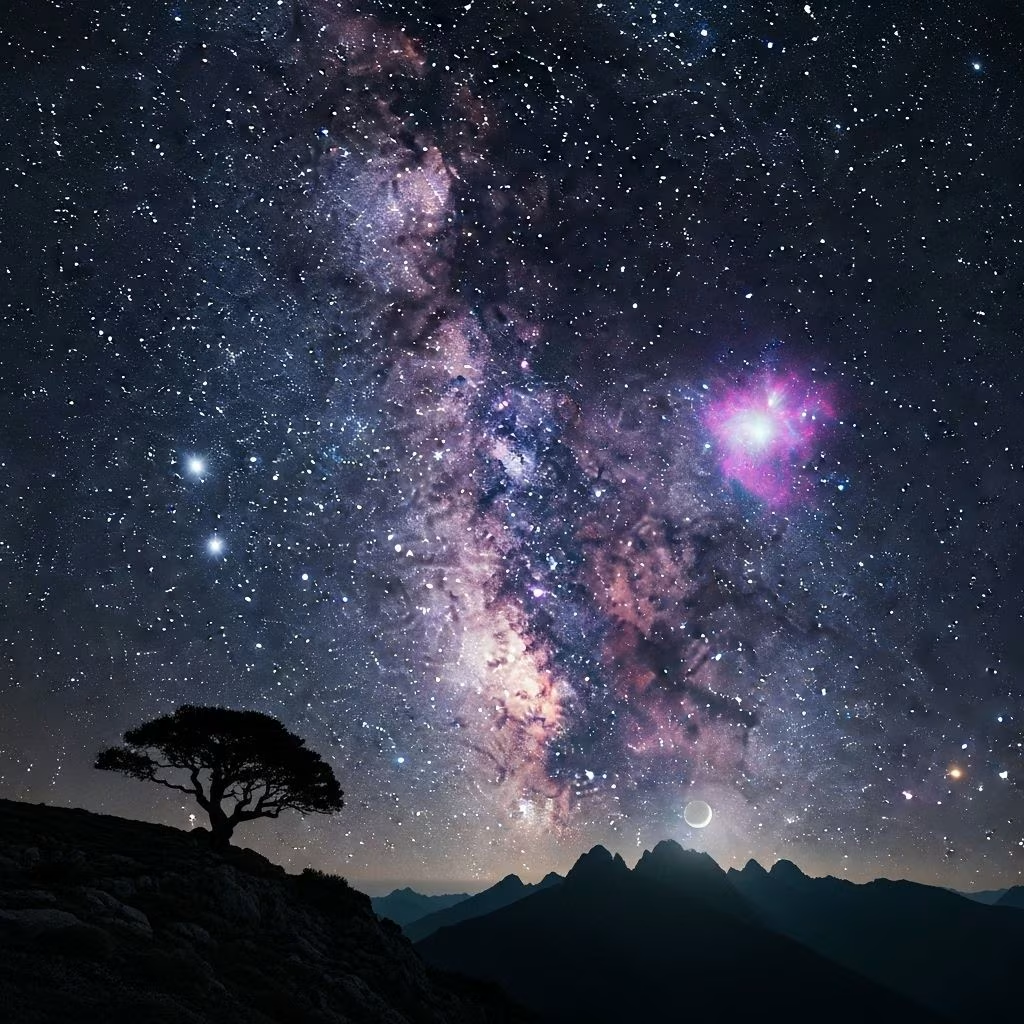
On clear, moonless nights away from city lights, the Milky Way is visible as a faint, cloud-like band stretching across the sky. This is our own galaxy, seen from within, composed of billions of stars. The summer months offer particularly vivid views in the Northern Hemisphere when the densest region arches overhead.
5. Deep Sky Objects
- Star Clusters: The Pleiades (Seven Sisters) and the Beehive Cluster are both visible to the naked eye in dark skies.
- Nebulae: The Orion Nebula, a bright stellar nursery, can be discerned as a fuzzy patch beneath Orion’s belt even without a telescope.
- Galaxies: The Andromeda Galaxy is visible as a faint smudge in autumn skies—our nearest large galactic neighbor, nearly 2.5 million light-years away.
6. Meteors and Meteor Showers
Meteors, or “shooting stars,” trace brief bright streaks as they burn up in Earth’s atmosphere. Regular meteor showers—like the Perseids (August) and Geminids (December)—produce increased activity and are among the most anticipated nighttime spectacles.
7. Artificial Satellites and the International Space Station (ISS)
The steady motion of satellites and the bright, fast-moving International Space Station are often visible shortly after sunset or before sunrise, appearing as unblinking dots traversing the sky. Dedicated satellite passes can be tracked through online tools or apps.
Table: Night Sky Objects and How to See Them
| Object | Visibility | Best Viewing Method |
|---|---|---|
| Moon | All months, brightest object after Sun | Eye, binoculars, telescope |
| Planets | Various, depends on orbital position | Eye, binoculars for details |
| Stars | Every clear night | Unaided eye |
| Constellations | Seasonal, varies by hemisphere | Star charts, apps, unaided eye |
| Meteors | Meteor showers peak multiple times yearly | Unaided eye, dark skies |
| Satellites & ISS | Shortly after sunset/before dawn | Advance tracking with apps, unaided eye |
| Milky Way | Summer/autumn in dark-sky areas | Unaided eye |
| Deep Sky Objects | Varies by object/season | Binoculars/telescope |
Cultural and Historical Significance of the Night Sky
For countless generations, people across the globe have turned to the night sky for storytelling, navigation, agriculture, and religious rituals. The patterns of stars and the cycles of celestial bodies inspired myths and legends, helping ancient peoples develop calendars, predict seasons, and orient themselves across land and sea.
- Navigation: Mariners used Polaris (the North Star) for latitude; the Southern Cross guides travelers in the Southern Hemisphere.
- Timekeeping: Lunar and solar cycles provided the basis for early calendars—vital for agriculture and festivals.
- Mythology: Constellations have different stories across cultures, from Greek legends of Orion to Chinese lore of the Cowherd and Weaver Girl.
In modern times, amateur and professional astronomers alike continue to study the night sky, furthering our understanding while preserving a link to humanity’s collective past.
Celestial Events and What to Watch For
Throughout the year, the night sky offers a calendar of special events visible to the naked eye or with basic equipment. Here are highlights to mark on your astronomical calendar:
- Meteor Showers: Major showers like the Perseids (August) and Geminids (December) offer peak rates and bright meteors.
- Eclipses: Total and partial lunar and solar eclipses captivate skywatchers with rare, dramatic changes in the Moon’s or Sun’s appearance.
- Planetary Oppositions: Jupiter and Saturn are brightest and closest during opposition, offering easy viewing through telescopes.
- Conjunctions: When planets or the Moon appear close together in the sky, these encounters are known as conjunctions—often photogenic and easy to spot.
To stay informed about events and best viewing opportunities, consult astronomical almanacs, space agency websites, or digital sky-tracking tools.
Challenges in Observing the Night Sky
Increasing light pollution in urban and suburban areas poses a significant challenge for stargazers, diminishing the visibility of stars, the Milky Way, and other faint objects. Recent growth in artificial satellites and space debris also contributes to a brighter night sky, altering traditional skywatching conditions and even challenging astronomical research.
- Light Pollution: City lights scatter and brighten the night sky, washing out faint stars and deep-sky features. The International Dark-Sky Association promotes mitigation efforts.
- Satellites and Space Debris: Reflected sunlight from thousands of satellites and debris can increase overall sky brightness, making it even more challenging for astronomers and observers everywhere to enjoy a truly “dark” sky.
Despite these challenges, passionate skywatchers continue to seek out and preserve dark-sky locations for education and enjoyment.
Getting Started: Tips for Beginner Stargazers
- Start Simple: Before investing in equipment, use your eyes to learn the motion of the sky and identify brighter objects and constellations.
- Use Technology: Smartphone sky maps and planetarium apps provide real-time, location-specific guidance.
- Keep a Log: Record your observations in a notebook—note date, time, weather, objects seen, and any special phenomena.
- Connect Locally: Join astronomy clubs or seek out community events like local star parties for group observations and shared equipment.
- Respect the Environment: When traveling to dark-sky sites, follow Leave No Trace principles and minimize impact on wildlife and local communities.
Frequently Asked Questions (FAQs)
Q: What is the best time of the year to observe the night sky?
A: The best time depends on your location and what you want to see. Generally, autumn and winter offer longer nights and clearer air, while summer offers views of the densest regions of the Milky Way. Check astronomical calendars for specific events.
Q: How can I reduce the impact of light pollution on stargazing?
A: Travel to designated dark-sky areas, use outdoor lights with shielding, and minimize unnecessary lighting around your home. Join local dark-sky advocacy efforts to support broader solutions.
Q: Are there any objects I can see every night?
A: Yes, the Moon is visible in some phase nearly every night, and many constellations and bright planets are visible for weeks or months at a time. Satellite passes like the International Space Station occur multiple times per week from most locations.
Q: What resources can help me learn about the night sky?
A: Planetarium apps, printed star charts, astronomy magazines, and websites like those of major space agencies are all useful. Local astronomy clubs and community observatories also offer hands-on support and guidance.
Q: Is stargazing possible from the city?
A: While light pollution limits what you can see, bright objects such as the Moon, planets, and some star clusters are still visible. Even in urban areas, you can observe major celestial events and learn basic constellations before venturing to darker locations.
Conclusion
The night sky remains a vast natural wonder accessible to anyone willing to look up. Whether you are viewing familiar constellations, chasing meteor showers, or taking your first glimpse through a telescope, each experience connects you with a rich heritage of exploration and discovery. Armed with curiosity, patience, and a little knowledge, you can unlock the endless secrets of the celestial canopy.
References
- https://www.space.com/news
- https://www.space.com
- https://theskylive.com
- https://spacetonight.com/category/night-sky/
- https://www.spaceanswers.com
- https://www.youtube.com/watch?v=fgkDZPEtf5E
- https://www.timeanddate.com/astronomy/night/
- https://www.thespacereview.com/article/4562/1
- https://www.astronomy.com
- https://www.universetoday.com
- https://www.slowdown.media/article/time-and-date-night-sky-map
- https://thecriticalscript.com/article-details/four-stunningly-bright-space-objects-visible-with-the-naked-eye-in-the-night-sky
- https://science.nasa.gov/skywatching/
- https://www.skyatnightmagazine.com
- https://www.youtube.com/watch?v=TKIxtaJ4vKg
- https://www.planetary.org/articles/why-are-there-no-stars
- https://www.skyatnightmagazine.com/space-science
- https://theskylive.com/guide