


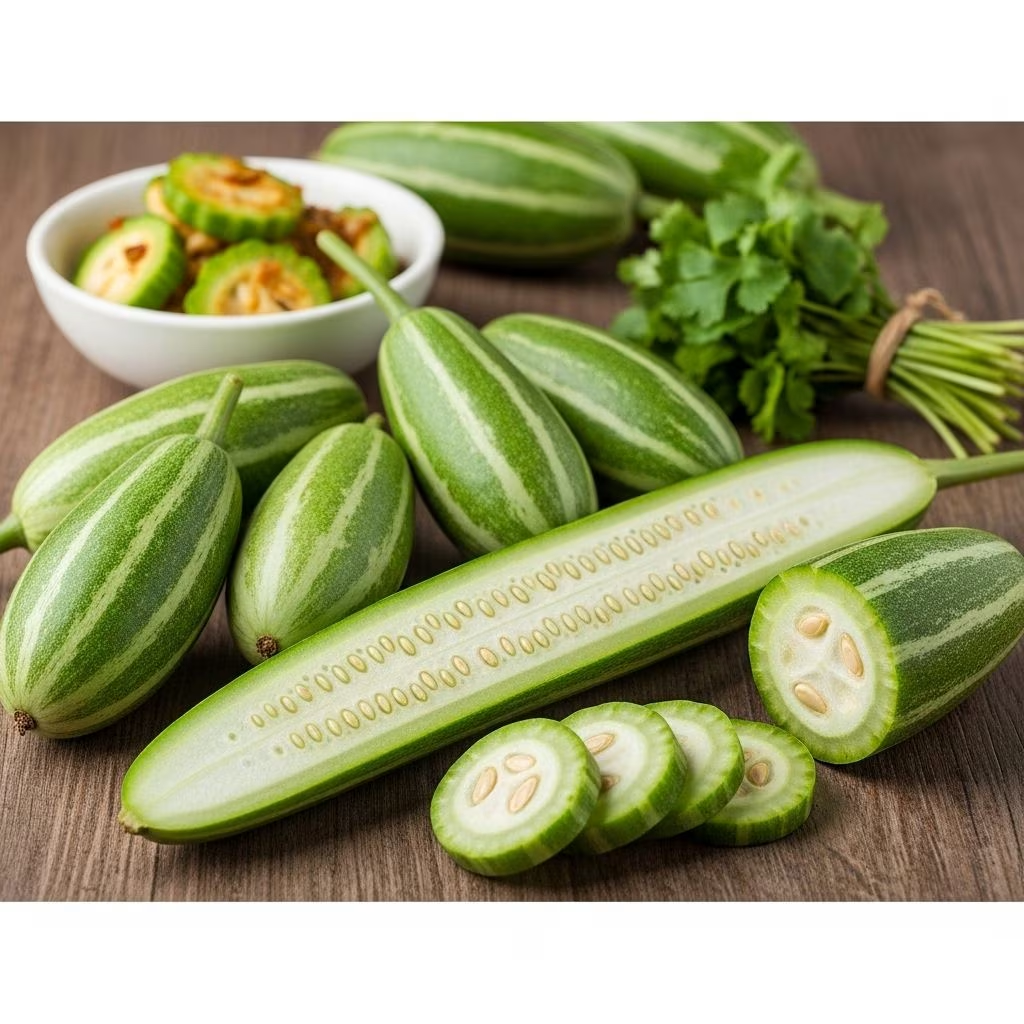
Ivy gourd (Coccinia grandis), also known as Tindora (Hindi), Kundru (Hindi), Kovakkai (Tamil/Malayalam), and Kovaikkai (Tamil), is a fast-growing perennial vine from the Cucurbitaceae family—renowned both as a staple vegetable in South and Southeast Asian cuisines and for its role in traditional herbal medicine. This resilient plant’s tender, cucumber-like fruits are appreciated for their mild flavor and versatility in cooking.
- Scientific name: Coccinia grandis (syn. Coccinia indica)
- Family: Cucurbitaceae
- Common names: Ivy gourd, Kundru, Tindora, Kovakka, Kowai, Telakucha, Tondekai
Introduction to Ivy Gourd
Ivy gourd is a prolific vine native to tropical regions of Africa and Asia. Its slender, green young fruits and impressive climber growth habit have established it as a valued garden and farm crop throughout India, Southeast Asia, and beyond. The edible fruits, leaves, and roots serve diverse roles in food, fitness, and folk medicine.
Vernacular Names and Synonyms
Ivy gourd is known by multiple names across different languages and regions, reflecting its wide adoption:
- Hindi: Kundru, Tindora, Tirkol
- Bengali: Telakucha
- Gujarati: Tindora, Gove
- Kannada: Tondekai
- Marathi: Tadali
- Malayalam: Kovakka
- Punjabi: Kanduri
- Telugu: Dondakaya, Kaki donda
- Tamil: Kovaikkai
- Sanskrit: Bimbi, Tundikeri, Raktaphala
- English: Ivy Gourd, Scarlet Gourd, Kowai
Botanical Description and Cultivation
Ivy gourd is a dioecious, perennial climber that thrives in tropical and subtropical climates. It is fast-growing, often reaching up to 30 feet, and is valued for both its ornamental foliage and its edible produce. The plant exhibits several distinct botanical features:
- Leaves: Heart- to pentagon-shaped, large, and arranged alternately along the stem. The upper surface is smooth, while the underside is softly hairy.
- Flowers: Star-shaped, large, and white. The plant requires cross-pollination, being dioecious.
- Fruits: Ovoid to elliptical, 25–60 mm long and 15–35 mm diameter, with smooth, hairless skin. Unripe fruits are green with pale stripes, ripening to red or orange.
- Roots: Tuberous and robust, sometimes used in traditional remedies.
- Growth habit: Vigorous climber—requires trellising or support to facilitate vertical growth.
Cultivation is favored in well-draining, loose, and porous soils with ample sunlight and regular moisture. The ivy gourd can sometimes become invasive if left unchecked, particularly in gardens in warm regions.
Table: Botanical Features of Ivy Gourd (Coccinia grandis)
| Feature | Description |
|---|---|
| Growth Habit | Perennial, climbing vine |
| Height | Up to 30 feet (9 meters) |
| Leaves | Heart/pentagon shaped, alternate, slightly hairy underside |
| Flowers | Large, star-shaped, white |
| Fruits | Ovoid, green (unripe), red/orange (ripe), 25–60mm long |
| Native Range | Tropical Asia and Africa |
| Soil | Well-draining, loose, fertile |
Nutritional Value of Ivy Gourd
Ivy gourd is a low-calorie vegetable with an impressive micronutrient profile. It is valued for its dietary fiber, vitamins, minerals, and phytochemicals. Typical nutritional values (per 100g fresh fruit) include:
- Energy: 21 Kcal (1% RDA)
- Carbohydrates: 3.4 g (2.6% RDA)
- Protein: 0.2 g (1% RDA)
- Total Fat: 0.2 g (1% RDA)
- Cholesterol: 0 mg
- Dietary Fiber: 2.9 g (7.6% RDA)
- Calcium: 24 mg (2.4% RDA)
- Iron: 0.9 mg (11% RDA)
- Beta-Carotene: 2.24 mg
- Lycopene: 5.68 mg
It also contains trace minerals, including potassium, magnesium, and phosphorus, essential for various bodily functions.
Health Benefits of Ivy Gourd
Traditional medicine and emerging scientific research highlight several potential benefits of ivy gourd, including:
- Supports blood sugar control: Compounds in ivy gourd may assist in managing blood glucose, making it popular in diabetes management.
- Aids digestion: The fiber content supports bowel regularity and can help prevent constipation.
- Rich in antioxidants: Vitamins and phytonutrients combat oxidative damage from free radicals.
- Anti-inflammatory effects: Ivy gourd is used traditionally for inflammatory disorders and infections.
- Weight management: Being low in calories and fat, it fits well in weight loss diets.
- Bone health: Moderate calcium levels contribute to skeletal strength.
- Potential antimicrobial activity: Some studies found ivy gourd extracts inhibit certain pathogens.
Note: Most clinical evidence is preliminary; benefits are widely reported in folk usage and traditional texts.
Culinary Uses and Preparation
Ivy gourd is a flexible ingredient in kitchens across India, Southeast Asia, and Africa. The young, tender, unripe fruits are the culinary stars, valued for their mild, neutral flavor and crisp, juicy texture.
- Stir-fries and sautés: Ivy gourd is sliced or chopped and stir-fried with spices, often paired with onions, tomatoes, and peppers.
- Curries and stews: Blends well with lentils, potatoes, and coconut milk in saucy gravies.
- Pickles: Ivy gourd is sometimes pickled in vinegar or oil-based brines with chilies and mustard seeds.
- Salads: Lightly blanched or raw, sliced ivy gourd complements fresh salads.
- Rice dishes: Mixed with rice or added to pulao/biryani for extra crunch.
- Side dishes: Often cooked as a dry vegetarian side with mild or spicy seasoning.
The fruit can be cooked or eaten raw (when fully ripe and red); however, the unripe green fruits are preferred for most dishes. Leaves and roots are used selectively in herbal recipes. Seeds are edible except in mature, hard fruits.
Taste Profile
Ivy gourd’s taste is mild and somewhat reminiscent of cucumber or young squash. The texture is crisp when cooked lightly; prolonged cooking can soften the flesh while drawing out subtle earthy or slightly bitter undertones.
- Raw (young, unripe): Crunchy, fresh, and neutral—less sweet and more vegetal than cucumber.
- Cooked: Absorbs flavors from spices and seasoning; becomes soft, succulent, and mildly sweet.
- Ripe (red/orange): Develops a sweeter, sometimes slightly tart flavor. Ripe fruits are less commonly eaten.
Selection and Storage
Ivy gourd fruits are available year-round in tropical regions. For optimal taste and texture:
- Select small, firm, vibrant green pods with taut skin and prominent stem ends.
- Avoid overripe, large, or soft pods. Signs of decay include flabbiness, cracks, or bruises.
- Storage: Keep unwashed ivy gourd in the refrigerator vegetable compartment; use within 2–3 days for best quality.
Traditional and Ayurvedic Uses
Ivy gourd plays a notable role in Ayurveda and other traditional systems of medicine:
- Sanskrit name: Bimbi. Ancient texts classify it as part of groups used for root-based therapies and for inducing therapeutic vomiting (emesis) and purgation.
- Medicinal parts: Leaves and roots are used for decoctions; the fruit is used as a vegetable.
- Uses in Ayurveda:
- Treatment of intestinal worms, skin diseases, bleeding disorders, mild anemia, and management of excess thirst.
- Recommended for balancing kapha and pitta doshas; considered light and strong in action.
- Other ethnic medicine: Used for viral/bacterial infections, jaundice, and fever in several folk traditions.
Modern research is ongoing, but its folk reputation drives continued interest in its medicinal value.
Potential Side Effects and Precautions
- Ivy gourd is generally safe when consumed as food in moderate amounts. Rare allergic reactions can occur in sensitive individuals.
- Medicinal doses (especially root and leaf extracts) should be taken only under professional guidance, especially for those with chronic health conditions or on medication for diabetes.
- Pregnant and lactating women should exercise caution, as research on safety is limited.
Frequently Asked Questions (FAQs)
Q: Can ivy gourd help with diabetes?
A: Traditional usage and emerging research suggest possible blood sugar-lowering properties, but clinical evidence is limited. Always consult a healthcare provider for diabetes management.
Q: Which parts of the ivy gourd plant are edible?
A: The tender, immature fruits are widely eaten. Young leaves and shoots can be cooked. Roots are used for medicinal purposes, not culinary.
Q: How does ivy gourd taste compared to other vegetables?
A: Its flavor is mild and neutral, similar to cucumber or young squash, becoming a little sweeter and more fragrant as it ripens.
Q: How do you prepare ivy gourd for cooking?
A: Rinse thoroughly, trim the ends, slice or chop as desired. Can be stir-fried, sautéed, curried, or pickled—cooks quickly.
Q: Is ivy gourd available outside Asia?
A: It is increasingly available in ethnic markets across the world, especially in countries with large South Asian communities.
References
- Nutrition data and general botany:
- Ayurvedic uses and properties:
- Traditional and folk uses, safety, modern research:
References
- https://www.nutrition-and-you.com/ivy-gourd.html
- https://www.easyayurveda.com/2016/09/19/ivy-gourd-benefits-ayurveda-usage-remedies-research-side-effects/
- https://permapeople.org/plants/coccinia-grandis-ivy-gourd
- https://en.wikipedia.org/wiki/Coccinia_grandis
- https://www.cabidigitallibrary.org/doi/full/10.1079/cabicompendium.14659
- https://www.stuartxchange.org/IvyGourd
- https://bihrmann.com/caudiciforms/subs/coc-gra-sub.asp
- https://pfaf.org/user/Plant.aspx?LatinName=Coccinia+grandis


