


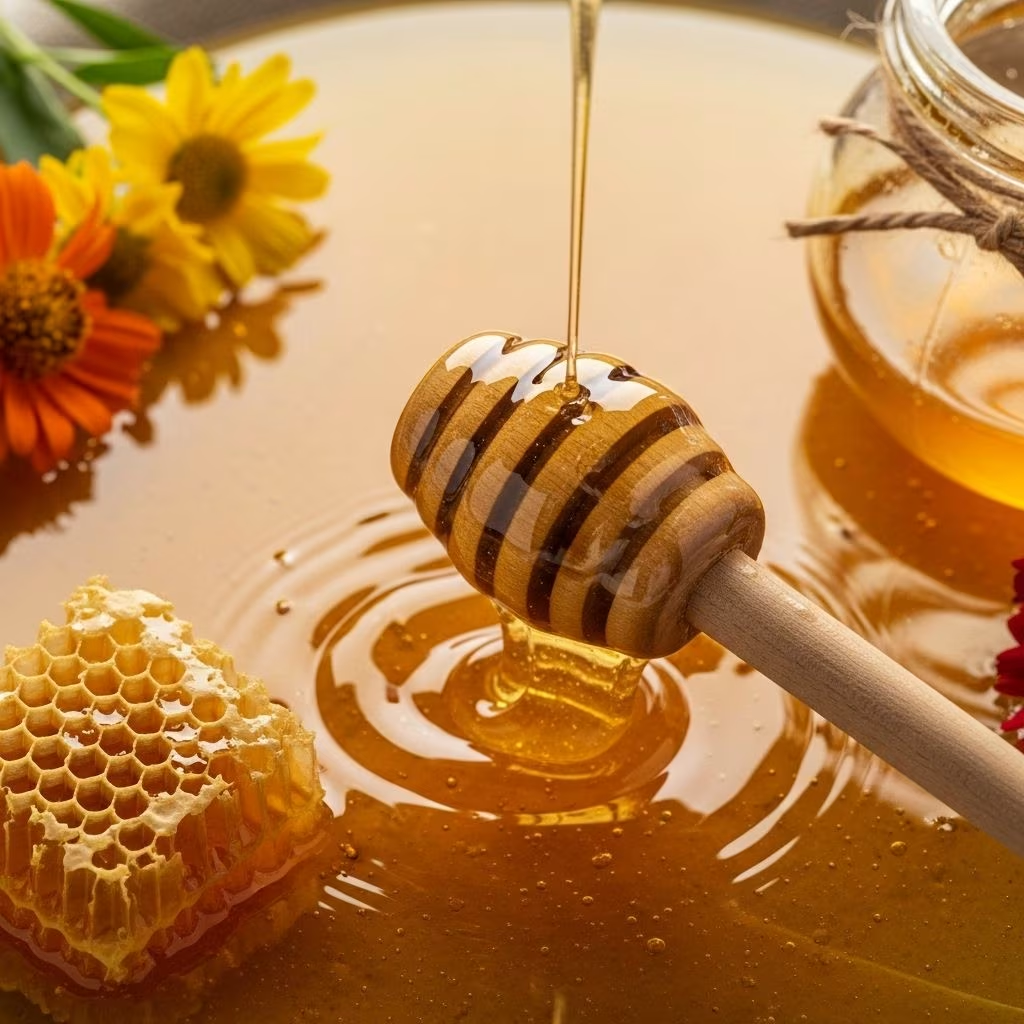
Honey is much more than a natural sweetener. Esteemed for thousands of years in cultures around the world, honey is a product of intricate chemistry, sophisticated biological processes, and a remarkable relationship between bees and flowering plants. This article offers a thorough exploration of honey, including its origins, nutritional properties, renowned health benefits, wide-ranging uses, and the characteristics that shape its beloved taste.
What Is Honey?
Honey is a natural, viscous, sweet liquid produced by honey bees from the nectar of flowers or secretions of other plants. It is one of the only foods produced by insects and consumed by humans on a wide scale. Beyond its culinary fame, honey stands out for its complex chemistry, long shelf life, and diverse biological properties.
How Honey Is Made
Honey production is a sophisticated, multi-step process harnessed by honey bees (Apis mellifera):
- Foraging: Worker bees collect nectar from flowering plants.
- Conversion: Bees use enzymes (notably invertase) to break down sucrose in the nectar into simpler sugars, such as glucose and fructose.
- Dehydration: The nectar is stored in honeycomb cells and repeatedly fanned by bee wings to reduce water content.
- Sealing: Once water content drops to 13–20%, bees seal the honeycomb with a wax cap, preserving the honey for their colony — and for later human harvest.
This process results in a supersaturated solution of sugars, enzymes, natural acids, and water, giving honey its stability and resistance to spoilage.
Chemical Composition of Honey
Honey is known for its varied and rich chemical makeup. Its composition can slightly differ based on plant source, geography, and bee species. Main components include:
- Carbohydrates (80–85%): Mainly fructose (38–41%) and glucose (31–35%), with minor amounts of sucrose, maltose, melezitose, and oligosaccharides.
- Water (15–17%): Low moisture inhibits microbial growth and gives honey its thickness.
- Proteins and Enzymes (0.3%): Including invertase, glucose oxidase, and catalase, which contribute to honey’s chemical evolution and biological activity.
- Vitamins and Amino Acids: Primarily B vitamins (B2, B3, B5, B6, B9) and trace amounts of C and K. Several amino acids — particularly proline — are also present.
- Minerals and Trace Elements: Notably potassium, calcium, magnesium, sodium, iron, zinc, copper, phosphorus, manganese, and a spectrum of microelements varying by origin.
- Organic Acids: Gluconic acid prevails, produced by glucose oxidation, contributing to honey’s slight acidity (pH 2.4–4.7) and flavor.
- Polyphenols, Flavonoids, Pigments, and Volatile Compounds: Responsible for the aroma, color, antioxidant properties, and distinctive tastes of various honey varieties.
- Other Minor Compounds: Pollen grains, phenolic acids, and naturally produced 5-hydroxymethylfurfural (HMF), used as a marker for honey shelf-life and processing history.
The following table illustrates the approximate major nutrient content of a typical honey sample:
| Component | Average Amount (%) |
|---|---|
| Fructose | 38.0 |
| Glucose | 31.0 |
| Water | 17.0 |
| Sucrose | 1.0–3.0 |
| Other sugars/compounds | Up to 13.0 |
| Enzymes, vitamins, minerals | ~1.0 |
Physical Properties of Honey
Honey’s physical properties are distinct and influenced by composition, floral source, geography, and storage:
- Color: Ranges from near colorless or pale yellow to dark amber, brown, and even black, determined by minerals, pollen, and floral source.
- Viscosity: Honey is notably thick; its viscosity correlates inversely with temperature and moisture content. At room temperature with typical moisture (17–18%), honey is slow-flowing and sticky.
- Density: Ranges from 1.38 to 1.45 kg/L at 20°C, denser than most liquids due to high dissolved sugar.
- Granulation/Crystallization: Over time, glucose may precipitate, giving honey a grainy or crystalline texture. Some honeys (e.g., those with higher glucose) crystallize faster; this is natural and does not indicate spoilage.
- Acidity: Slightly acidic (pH 2.4–4.7), which relates to flavor and preservative qualities.
- Conductivity: Related to mineral content and sometimes used for honey authentication.
Health Benefits of Honey
Honey’s health benefits have been widely acknowledged in historical texts and are supported by modern scientific research:
- Antimicrobial Action: Honey inhibits bacteria, molds, and some viruses due to its high sugar content, acidity, and compounds like hydrogen peroxide and defensins. It is particularly noted for effectiveness in wound healing and topical applications.
- Antioxidant Properties: Polyphenols, flavonoids, and organic acids act as natural antioxidants, potentially reducing oxidative stress and lowering the risk of chronic diseases.
- Soothing Coughs and Sore Throats: Clinical studies show that honey can be as effective as certain over-the-counter cough remedies for soothing symptoms, especially in children over 1 year old.
- Wound and Burn Healing: Ancient and modern uses include application to minor burns, wounds, or skin ulcers for faster healing and lower infection rates due to honey’s hygroscopic, antibacterial, and anti-inflammatory properties.
- Digestive Health: Prebiotic oligosaccharides in honey support healthy gut bacteria, while its gentle laxative effect can aid digestion.
- Energy Source: Honey is quickly absorbed and provides rapid energy, making it a popular natural sweetener among athletes.
- Potential Anti-Inflammatory and Immunomodulating Effects: Compounds found in honey may help suppress some inflammatory mediators in the body.
Note: Due to the risk of botulism, honey should never be given to infants under one year old.
Culinary and Non-Culinary Uses
Culinary Uses
- Sweetener: Used in beverages (tea, coffee), on breakfast foods, in baked goods, sauces, and dressings.
- Preservative: Historically used in food preservation due to antimicrobial qualities.
- Fermented Beverages: Key ingredient in mead (honey wine) and some craft beers.
- Glazing and Roasting: Provides a unique caramelization on meats and vegetables when baked or roasted.
- Desserts and Candies: Adds moisture, shine, and distinct flavor to confectionery and pastries.
Non-Culinary Uses
- Medicinal Topical Applications: For burns, wounds, cuts, and ulcers.
- Cosmetics and Skincare: Used in face masks, creams, and hair care for moisturizing and antibacterial effects.
- Traditional Rituals: Part of religious ceremonies, folk remedies, and natural therapies throughout history.
- Household: Sometimes used as a polish for wood or leather and in homemade cleaning agents.
Taste and Sensory Qualities
The flavor and aroma of honey are complex and deeply influenced by the type of plants visited by the bees. Several sensory factors include:
- Sweetness: Fructose is sweeter than glucose, so honey with higher fructose tastes sweeter and more floral.
- Acidity: Gives honey a subtle tartness, balancing its sweetness.
- Aroma: Volatile organic compounds and polyphenols contribute to floral, herbal, woody, or even spicy scents. Clover, acacia, orange blossom, lavender, manuka, buckwheat, and chestnut honeys each offer unique profiles.
- Texture: Varies from clear and runny to thick, creamy, or even grainy depending on crystallization and processing.
Different honey varieties from around the globe provide a wide palate of flavors and appearances:
| Honey Variety | Common Color | Taste Notes | Typical Aroma |
|---|---|---|---|
| Clover | Pale amber | Light, mild, clean | Floral, grassy |
| Manuka (New Zealand) | Dark brown | Earthy, slightly bitter, medicinal | Woody, herbal |
| Buckwheat | Dark brown | Strong, malty, molasses-like | Molasses, malty |
| Orange Blossom | Light golden | Sweet, citrusy | Fruity, floral |
| Acacia | Very pale, almost transparent | Delicate, mildly sweet | Soft, floral |
Comparison Table: Honey vs. Other Sweeteners
| Sweetener | Main Components | Glycemic Index (GI) | Mineral Content | Notes |
|---|---|---|---|---|
| Honey | Fructose, glucose, trace minerals | 32–85* (varies by type) | Rich in potassium, calcium, some trace minerals | Antioxidants, enzymes, antimicrobial properties |
| White Sugar | Sucrose | 65 | Negligible | No beneficial compounds |
| Maple Syrup | Sucrose, trace minerals | 54 | Manganese, zinc present | Distinct earthy flavor |
| Agave Nectar | Fructose, glucose | 10–19 | Low | Sweeter than honey, less viscous |
*GI depends on the floral source and processing.
Frequently Asked Questions (FAQs)
Q: Why does honey crystallize? Is it still safe to eat?
A: Crystallization is a natural process caused by glucose precipitating out of the supersaturated liquid. Crystallized honey is perfectly safe and can be liquefied by warming gently in hot water.
Q: Can honey go bad or spoil?
A: Pure, sealed honey is highly resistant to spoilage due to low moisture and acidic pH. However, improperly stored honey can ferment if water content increases or it absorbs moisture from the environment.
Q: Why can’t infants under one year old have honey?
A: Honey can contain spores of Clostridium botulinum which may cause botulism in infants whose digestive systems are not fully developed.
Q: Is there a difference between raw and processed honey?
A: Raw honey is unheated and unfiltered, retaining pollen and most native enzymes. Processed honey is filtered and sometimes pasteurized; this may remove beneficial compounds and affect flavor or texture.
Q: How should honey be stored?
A: Store in a tightly sealed container at room temperature, away from direct sunlight and moisture.
Conclusion
Honey is a unique natural food bridging the worlds of biology, chemistry, nutrition, and culture. Its sweetness, flavor complexity, and myriad health-promoting properties make it a valuable addition to both traditional and modern lifestyles. Whether enjoyed straight from the spoon, as part of a favorite recipe, or used for wellness, honey’s allure remains timeless and universal.
References
- https://pmc.ncbi.nlm.nih.gov/articles/PMC5815988/
- https://en.wikipedia.org/wiki/Honey
- https://www.foodsciencejournal.com/assets/archives/2022/vol7issue1/7-1-18-831.pdf
- https://beeculture.com/the-chemistry-of-honey/
- https://cdn.fortunejournals.com/articles/chemical-composition-and-uses-of-honey-a-review.pdf
- https://www.perfectbee.com/learn-about-bees/the-science-of-bees/the-chemical-composition-of-honey


