Northern Lights Set to Illuminate 18 US States Tonight
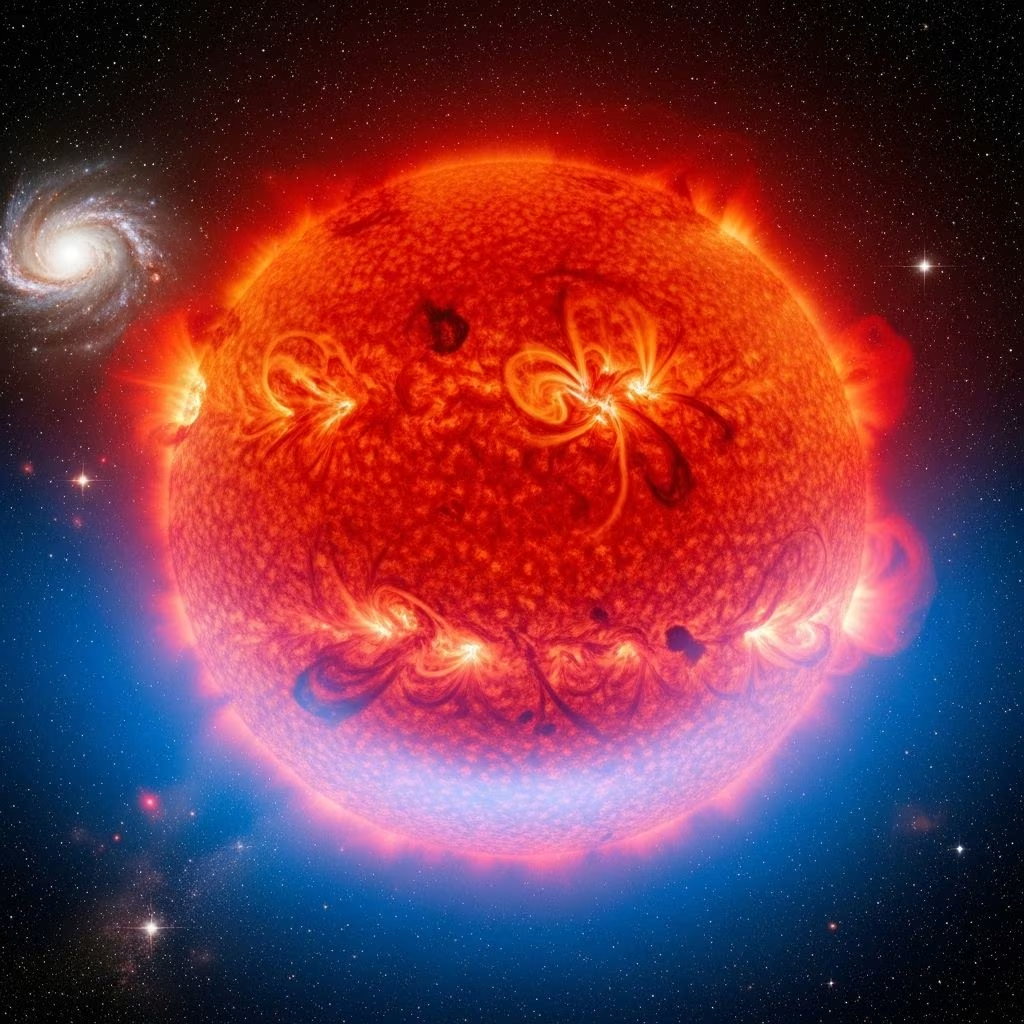
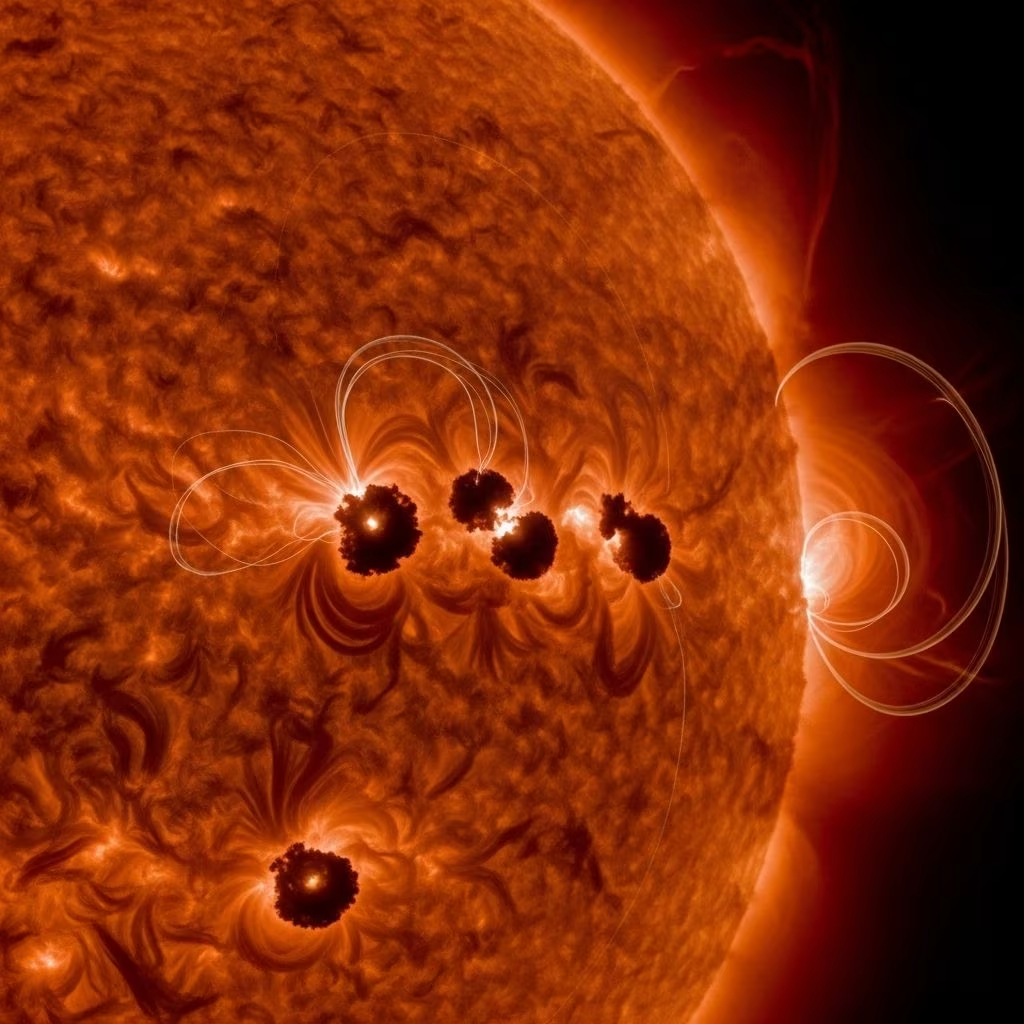
Tonight brings an exceptional opportunity for millions across the United States to witness the aurora borealis, commonly known as the Northern Lights. According to the National Oceanic and Atmospheric Administration (NOAA), a recent surge in solar activity has set the stage for these shimmering lights to appear as far south as 18 states. This event is characterized by a geomagnetic storm triggered by a coronal mass ejection (CME)—a significant burst of plasma and magnetic fields released from the sun—which is set to collide with Earth’s magnetic field and produce the vibrant celestial display.
What Are the Northern Lights?
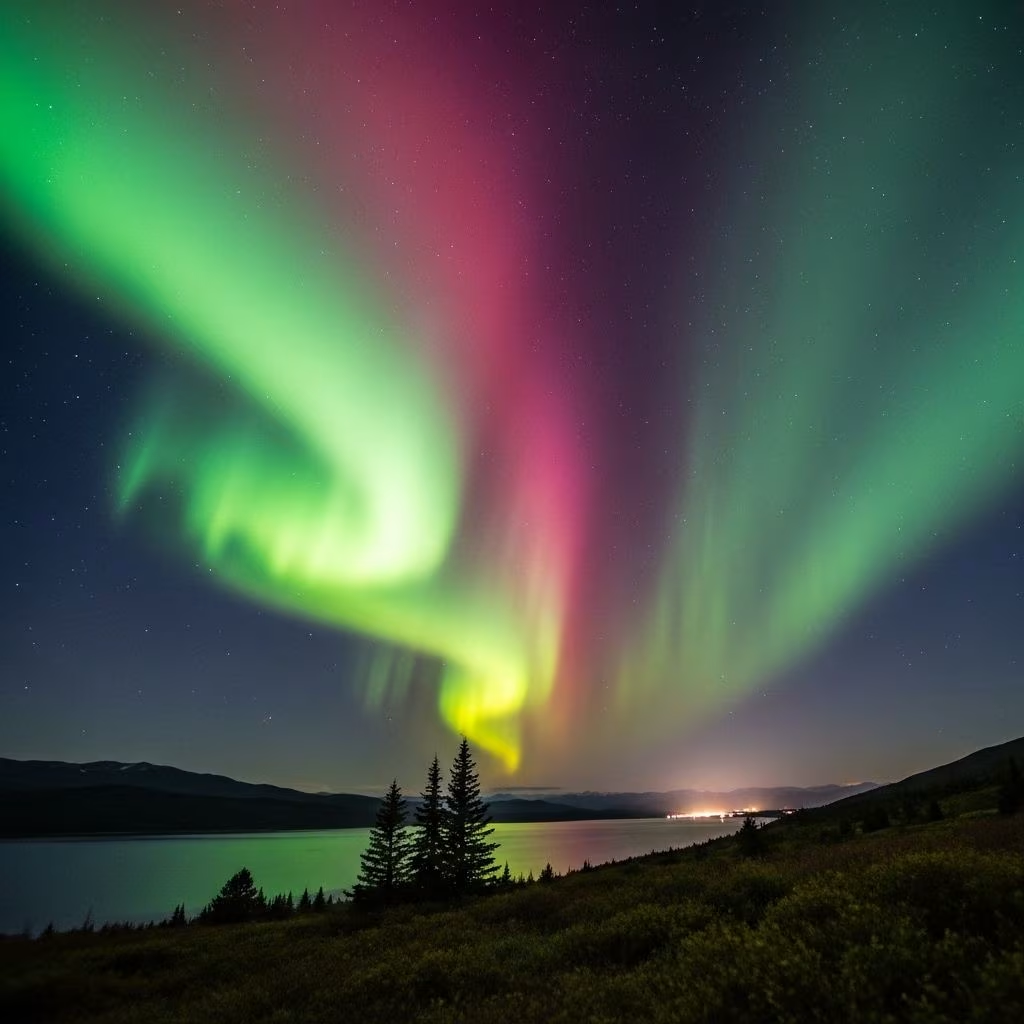
The Northern Lights, or aurora borealis, occur when charged particles ejected from the sun interact with Earth’s atmosphere at high latitudes. When these energetic particles enter our atmosphere near the magnetic poles, they crash into oxygen and nitrogen molecules, emitting brilliant waves of green, blue, purple, and sometimes red light in the sky. These phenomena are usually seen in places like Alaska, Canada, and Scandinavia, but tonight, favorable space weather means they can reach much farther south across the United States.
Why Will the Northern Lights Be Visible So Far South?
This rare visibility is thanks to increased solar activity, particularly a coronal mass ejection that erupted from the sun on August 5. CMEs emit huge clouds of solar plasma and magnetic fields into space, and when aimed toward Earth, they fuel geomagnetic storms. NOAA’s forecast places the Kp index at 5 tonight—a measure of geomagnetic disturbance on a 0-9 scale—suggesting that auroral activity will extend well beyond the usual northern boundaries.
- A Kp index of 5 is considered “minor” (G1 on the geomagnetic storm scale), but it’s strong enough to push the aurora as far south as northern US states.
- CMEs enhance the number and energy of solar particles hitting Earth, making for brighter and more widespread auroral displays.
- Such southward auroral events are relatively rare, occurring only a few times per solar cycle.
States Expected to See the Northern Lights Tonight
Forecasts from NOAA suggest that if skies remain clear, residents of the following 18 states could catch sight of the northern lights as colorful bands or rippling curtains along the northern horizon:
- Washington
- Oregon
- Idaho
- Montana
- Wyoming
- North Dakota
- South Dakota
- Nebraska
- Minnesota
- Wisconsin
- Michigan
- Iowa
- Illinois
- Indiana
- Ohio
- Pennsylvania
- New York
- Massachusetts
Depending on local cloud cover and light pollution, the aurora may be visible in more southern states if a particularly strong geomagnetic pulse arrives.
How the View Line Works
The “view line” used in aurora forecasts defines the southernmost boundary where the aurora can be seen along the northern skyline. If you fall just north of this line and have a clear view of the horizon, you are in prime location for tonight’s display. The strength of the geomagnetic storm determines where the view line falls—higher Kp values push the boundary farther south.
Best Time to See Tonight’s Northern Lights
| Region | Peak Viewing Time | Notes |
|---|---|---|
| Midwest | 10 p.m. – 2 a.m. local time | Greatest visibility in areas with minimal light pollution |
| Northeast | 11 p.m. – 1 a.m. local time | Watch the northern horizon for colored arcs or glows |
| Pacific Northwest | Shortly after sunset to early morning | Best viewed away from city lights |
According to NOAA, the aurora will be brightest within one to two hours of midnight—usually just after sunset and before dawn. As the sun sets and the sky turns dark, look toward the northern horizon and scan for faint greenish or reddish glows. Clouds or artificial light may reduce visibility.
The Science Behind Auroral Displays
The sky show tonight is directly linked to solar-terrestrial interactions, which occur when energetic particles from a solar storm reach Earth. Here’s how it unfolds:
- Coronal Mass Ejections: The sun periodically releases massive bursts of plasma, which travel millions of kilometers through space.
- Magnetosphere Disturbance: When the CME hits Earth, it compresses and energizes our planet’s magnetic field.
- Particle Excitation: Charged particles funnel along magnetic field lines toward the poles, colliding with atmospheric gases.
- Light Emission: Oxygen emits green and red; nitrogen adds blue and purple hues. The combination creates the signature aurora patterns seen tonight.
Most northern lights are, by nature, unpredictable. The solar wind’s speed and density, coupled with Earth’s magnetic orientation, can cause the aurora to surge in brightness and geographic coverage for minutes or hours.
Tips for Viewing and Photographing the Aurora Borealis
- Find a dark sky: Light pollution masks faint auroral glows. Choose rural areas, parks, or certified dark sky locations for best results.
- Check forecast updates: Space weather can shift rapidly. Consult NOAA’s aurora forecasts and local cloud cover reports for adjustments.
- Bring the right gear: Warm clothing, sturdy boots, blankets, and snacks are helpful for long wait times.
- For photography: Use a tripod-mounted camera and long exposure settings; high ISO and wide aperture help capture colors.
- Be patient: Auroras often come in waves and may be subtle before intensifying. Give yourself several hours of viewing time.
Note that smartphone cameras with manual control or night mode can also capture impressive images, especially when the aurora is bright enough.
Geomagnetic Storm Scale and Its Impact
NOAA categorizes geomagnetic storms according to their severity, ranging from G1 (minor) to G5 (extreme). Tonight’s Kp index of 5 corresponds to a G1 Minor Storm:
- Minimal impact on power grids and satellites
- Enhanced auroral activity across northern states
- Potential for radio communication disruptions in extreme cases, but generally not expected at G1
Most geomagnetic disturbances of this level result in beautiful sky shows rather than technological disruptions.
What Causes Variability in Aurora Visibility?
Several factors shape whether the northern lights will be visible tonight:
- Solar wind conditions: Stronger and denser solar winds create more luminous auroras.
- Orientation of Earth’s magnetic field: A southward magnetic orientation amplifies auroral activity.
- Ground-level cloud cover: Clouds or fog can block views entirely, regardless of geomagnetic conditions.
- Local light pollution: Urban lights can drown out faint arc or glow features in the sky.
- Geographic location: The closer you are to the aurora “view line,” the higher your chances for a strong display.
Frequently Asked Questions (FAQs)
Q: What are the northern lights?
A: The northern lights, or aurora borealis, are luminous atmospheric phenomena caused by charged particles from the sun interacting with Earth’s magnetic field and atmospheric molecules, emitting vibrant colors in the night sky.
Q: Why are the northern lights visible in more states tonight than usual?
A: A strong coronal mass ejection from the sun has triggered a geomagnetic storm, expanding the auroral zone and allowing the northern lights to be seen as far south as 18 US states.
Q: What time should I look for the aurora?
A: The best chance to see the aurora is between 10 p.m. and 2 a.m. local time, with greatest brightness generally within 1–2 hours of midnight.
Q: Should I use my phone or a DSLR camera to photograph the aurora?
A: Both work, but a DSLR or mirrorless camera with manual settings is ideal for long exposures. Recent smartphones with night modes perform surprisingly well when aurora brightness is high.
Q: Can auroras interfere with technology?
A: Minor geomagnetic storms (Kp 5, G1) have minimal direct impacts, but in stronger events, auroras can disrupt radio communications and satellite operations.
Q: What should I do if I miss tonight’s show?
A: Solar activity moves in cycles. NOAA and space agencies regularly update forecasts, so future auroral events may occur in your area during periods of high geomagnetic activity.
How Often Do Such Auroral Events Occur?
While the aurora borealis is a regular occurrence near the Arctic Circle, widespread displays over the contiguous US are relatively rare. Such events align with peaks in the sun’s 11-year cycle—when solar activity and frequency of coronal mass ejections intensify. Space weather experts stress that tonight’s event was triggered by exceptional solar conditions, and it may be months or years before such a southward display happens again.
Conclusion: Don’t Miss Nature’s Nighttime Light Show
As solar particles dance across our atmosphere, bringing a shimmering green and purple glow to the night sky, tonight’s aurora offers a rare chance for millions to witness one of nature’s grandest spectacles. If you’re in one of the 18 forecasted states, grab your camera, check the forecast, and find a dark spot—nature may put on a dazzling display well outside normal boundaries. Stay tuned to NOAA and weather agencies for live updates on viewing conditions as the event unfolds.
References
- https://www.space.com/stargazing/auroras/northern-lights-may-be-visible-in-these-18-states-tonight-august-7-8
- https://www.usatoday.com/story/news/weather/2025/08/18/northern-lights-visible-states/85709040007/
- https://www.usatoday.com/story/news/nation/2025/08/08/northern-lights-forecast-aurora-map/85572299007/
- https://timesofindia.indiatimes.com/etimes/trending/aurora-2025-18-us-states-could-see-the-northern-lights-tonight-and-heres-how-to-watch-them/articleshow/123192825.cms
- https://abcnews.go.com/US/northern-lights-visible-dozen-us-states-tonight/story?id=124741604
- https://www.livescience.com/planet-earth/weather/auroras-may-be-visible-from-18-states-this-weekend-as-solar-storm-barrels-toward-earth
- https://www.clickondetroit.com/news/local/2025/08/08/northern-lights-could-be-visible-in-michigan-friday-night-heres-what-to-know/
- https://www.softservenews.com
- https://www.youtube.com/watch?v=mEb5uXw8oFc
- https://www.adventureworld.com/blog/the-best-times-places-to-see-the-northern-lights-in-2025/
- https://www.czen.org/northern-lights-forecast-these-u-s-states-could-see/
- https://www.space.com/stargazing/auroras/northern-lights-may-be-visible-in-these-18-us-states-sept-1-2-2025
- https://news.ssbcrack.com/northern-lights-might-be-visible-in-18-u-s-states-on-august-7-8-2025/
- https://www.youtube.com/watch?v=fRdI7mxDeMI
- https://www.swpc.noaa.gov/products/aurora-viewline-tonight-and-tomorrow-night-experimental