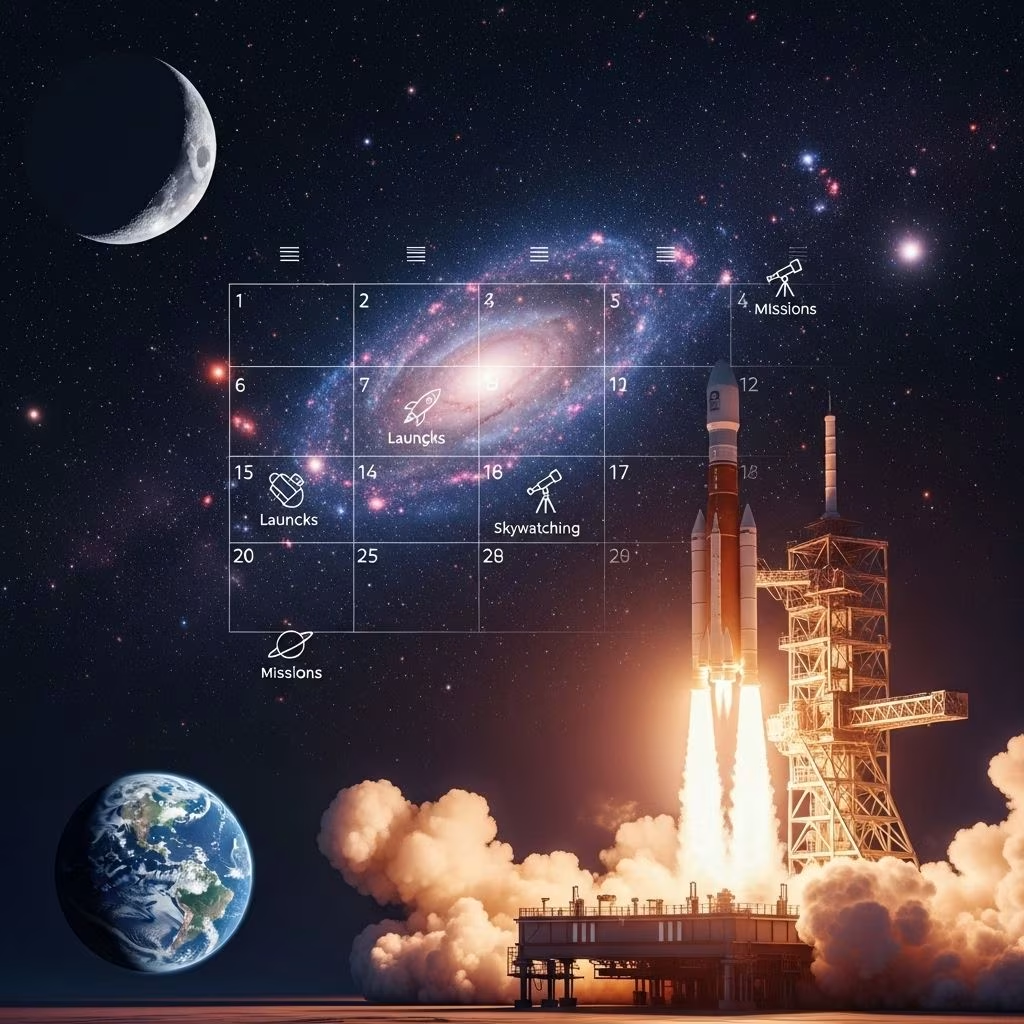
Space Calendar 2025: Rocket Launches, Skywatching Events, Missions & More
2025 promises to be a landmark year for spaceflight, astronomy, and exploration. Throughout the year, enthusiasts and professionals can look forward to a packed schedule of rocket launches, mission milestones, industry conventions, and celestial phenomena. This space calendar is curated to help you stay in sync with every major event, from NASA missions and international launches to skywatching opportunities and historical space anniversaries.
Please note: Launch dates are frequently updated and may change based on technical, weather, or logistical issues. Always verify details before making travel plans or event commitments.
Overview
- Rocket Launches: Key launches from NASA, ESA, Roscosmos, commercial players, and more.
- Skywatching Events: Meteor showers, eclipses, planetary alignments, and visible planets.
- Mission Milestones: Major updates on spacecraft, satellites, and interplanetary missions.
- Industry Conventions: Conferences, conventions, and workshops driving innovation.
- Historical Anniversaries: Important moments and achievements from the history of space exploration.
Rocket Launches
With multiple agencies and companies pushing the boundaries of space technology, 2025 is slated for a multitude of launches. Below are some of the highlights expected this year. Always check for real-time updates as schedules may shift quickly.
- NASA missions – From crewed launches to Mars/asteroid probes and scientific satellites, NASA continues to lead with ambitious projects throughout the year.
- ESA launches – Europe’s space agency plans several critical launches, including Earth observation satellites and collaborative missions.
- Roscosmos schedule – Russian launches include ISS resupply missions, planetary science payloads, and technology demonstrators.
- Commercial launches – SpaceX, Blue Origin, Rocket Lab, and other commercial entities will conduct both government and private launches, setting new benchmarks in reusable rocket technology.
- International missions – China’s CNSA, ISRO (India), JAXA (Japan) and other national agencies contribute globally, with lunar, Martian, and deep-space missions on the docket.
Notable Launches Expected in 2025
| Date (Tentative) | Agency | Mission | Destination |
|---|---|---|---|
| March 2025 | NASA | Artemis IV Crew Launch | Lunar Gateway/Orion |
| May 2025 | SpaceX & NASA | Crew Dragon Mission | International Space Station |
| June 2025 | ESA | EarthCARE Satellite | Low Earth Orbit |
| August 2025 | ISRO | Gaganyaan Uncrewed Test | Low Earth Orbit |
| September 2025 | CNSA | Chang’e Lunar Mission | Moon |
Launch windows can change with little notice. Always consult official agency sources for up-to-date information.
Skywatching Events
Every year offers a rich tapestry of celestial events visible from Earth. 2025 presents rare planetary alignments, dramatic meteor showers, and eclipses. A monthly calendar will help guide your observations and maximize your skywatching opportunities.
Monthly Highlights
- January: Quadrantid Meteor Shower Peak – Early January showcases one of the year’s most impressive meteor displays, best viewed after midnight under clear skies.
- March: Spring Equinox – The celestial marker for changing seasons in both hemispheres.
- May: Total Lunar Eclipse – Regions across Europe, Africa, and Asia may witness a spectacular blood-red Moon.
- June: Summer Solstice – Longest daylight period, an excellent opportunity for Northern Hemisphere observations.
- August: Perseid Meteor Shower – One of the year’s most popular showers reaches its peak, producing hundreds of bright meteors per hour.
- October: Annular Solar Eclipse – Watch for the infamous “ring of fire” as the Moon covers the central part of the Sun, best viewed along a narrow path.
- December: Geminid Meteor Shower – Considered the most reliable shower, bringing vibrant, multicolored meteors at peak rates around mid-December.
Visible Planets & Special Conjunctions
- Venus: Brilliant in the evening sky early in the year, shifting to morning appearances later.
- Mars: At opposition in July—closest, brightest, and best for telescopic observation.
- Jupiter: Dominates the night in autumn, with several moon transits visible through small telescopes.
- Saturn: Ringed planet visible in summer and early autumn, reaching opposition in August.
- Rare conjunctions: Watch for clusters where planets appear close together—excellent for astrophotography.
Mission Milestones
Numerous missions reach critical phases in 2025, marking years of international cooperation, technological progress, and public excitement. These milestones often involve spacecraft reaching their destinations, deploying payloads, or concluding groundbreaking experiments.
- Artemis IV Lunar Gateway Expansion – The Gateway space station around the Moon will receive its largest module and support its first long-duration crew stay.
- Europa Clipper – NASA’s ambitious mission to Jupiter’s icy moon will execute a major gravity-assist maneuver, preparing for close flybys.
- ExoMars Rover Operations – ESA’s rover continues groundbreaking soil analysis, searching for signs of life and conducting chemical tests.
- James Webb Space Telescope Updates – New exoplanet surveys and deep-field observations expand our cosmic understanding.
- Private Lunar Landers – Several commercial teams aim to land research instruments, technology demonstrations, and payloads on the Moon.
Space Industry Events & Conventions
2025 is packed with occasions to learn, network, and collaborate. Industry conventions bring together agencies, businesses, and academics to shape the future of space exploration.
- International Astronautical Congress (IAC): The preeminent gathering for global space professionals. Expect panels on lunar habitats, Mars missions, satellite technology, and more.
- Space Symposium: Held in Colorado, USA, this event attracts thousands of experts, featuring keynote speeches, new technology showcases, and strong government representation.
- Small Satellite Conference: Dedicated to innovation in smallsat and CubeSat missions, focusing on affordability and versatility.
- Regional and national events: Space industry summits, career fairs, educational workshops, and startup competitions happen across the globe.
Why Attend?
- Stay updated on industry trends and research breakthroughs.
- Network with leaders in aeronautics, astrophysics, engineering, and commercial spaceflight.
- Access new suppliers, technologies, and potential collaborators.
On This Day in Space History
Space history is filled with milestones that inspired generations and expanded the frontiers of human knowledge. Each month offers anniversaries that celebrate landmark achievements and remember notable challenges.
- April: Anniversary of Yuri Gagarin’s flight – The first human to orbit Earth in 1961.
- July: Apollo 11 Moon Landing – Commemorating the historic first steps on the lunar surface, July 20, 1969.
- October: Sputnik Launch – Remembering the dawn of the space age, October 4, 1957.
- Other notable anniversaries: First spacewalk, first woman in space, launch of iconic satellites such as Hubble and Voyager.
Frequently Asked Questions (FAQs)
Q: How can I keep track of changing rocket launch dates?
A: Rocket launch dates often shift due to weather, technical, and logistical reasons. Reliably check official agency calendars, and space news outlets for updates. Stay flexible with plans; use alerts and subscribe to verified sources for last-minute changes.
Q: Where can I watch launches and major sky events?
A: Many launches are live-streamed by agencies (NASA, SpaceX, ESA) and carried on space news websites. For skywatching, use astronomy apps or local observatory websites for optimal viewing times and locations.
Q: What tools help with observing celestial events?
A: Binoculars and telescopes improve viewing, but many meteor showers and eclipses are visible without special equipment. Download star maps, use skywatching apps, and join astronomy clubs for guided sessions.
Q: Are industry conventions open to the public?
A: Some large conventions welcome the public, academics, and students. Registration is usually required and fees vary based on participation level and event focus.
Q: How can I learn what happened today in space history?
A: “On This Day in Space” videos and articles offer a daily look back at key milestones. Several online archives, museum exhibits, and satellite calendars track these dates and their significance.
Resources & Further Reading
- Official NASA, ESA, ISRO, CNSA, Roscosmos mission calendars
- Space.com skywatching guides and visible planet forecasts
- Spaceflight Now and Supercluster launch schedules
- International Astronomical Union (IAU) event listings
- Local astronomy clubs and observatories
Disclaimer
Event dates in the Space Calendar are subject to frequent changes for technical, weather, and logistical reasons. Always consult multiple sources before scheduling travel or special observatory plans. This calendar relies on open data provided by leading space agencies, independent trackers, and mission updates. For the latest amendments and real-time launch information, verify with the event organizer or official mission schedule.
References
- https://www.space.com/32286-space-calendar.html
- https://web.archive.org/web/20240613152618/https:/www.space.com/32286-space-calendar.html
- https://www.spacecalendar.com
- https://www.spacecalendar.com/new-home-page/
- https://www.space.com
- https://www.spaceagenda.com/spaceagenda-relaunches-the-largest-global-space-industry-events-calendar/
- https://www.yearinspace.com/archives
- https://spacefoxies.com/calendar/
- http://www.astronautix.com/s/spacehistorycalendar.html
- https://www.youtube.com/watch?v=d2B9BfeGB4M
- https://spaceflightnow.com/launch-schedule/
- https://www.planetary.org/articles/calendar-of-space-events-2025
- https://www.spacedaily.com
- https://scottsastropage.com/ultimate-space-calendar/
- https://www.youtube.com/watch?v=xa0G-vuWvtU
- https://www.timeanddate.com/astronomy/sights-to-see.html
- https://starwalk.space/en/news/astronomy-calendar-2025