Spring Equinox 2025: Embracing the End of Winter in the Northern Hemisphere
The Spring Equinox 2025 marks a turning point for the Northern Hemisphere. On March 20, 2025, at precisely 5:01 a.m. Eastern Daylight Time (0901 GMT), Earth’s axis and orbit align so that daylight and nighttime become nearly equal—ushering in the official start of spring, also known as the vernal equinox.
What Is the Equinox?
The term equinox comes from the Latin words “aequus” (equal) and “nox” (night). During both the vernal (spring) and the autumnal (fall) equinoxes, the duration of day and night are almost exactly the same everywhere on the planet. This unique balance occurs because of Earth’s 23.5° axial tilt and its position relative to the sun.
- Two equinoxes occur each year: one in March, the other in September.
- On these dates, the sun crosses the celestial equator, producing approximately 12 hours of daylight and 12 hours of darkness globally.
- The vernal equinox signals the start of spring in the Northern Hemisphere; in the Southern Hemisphere, it marks the beginning of autumn.
Why Does the Vernal Equinox Happen?
Earth orbits the sun while tilted at about 23.5° on its axis. This tilt causes different regions of the planet to receive varying amounts of sunlight throughout the year, creating seasons:
- When the Northern Hemisphere is tilted toward the sun: It experiences summer; days are longer and warmer.
- When tilted away: Winter arrives with shorter, colder days.
- During the equinoxes: Earth’s axis isn’t tilted toward or away from the sun, so sunlight directly strikes the equator.
Key Facts About the 2025 Spring Equinox
- Date and Time: March 20, 2025, at 5:01 a.m. EDT (0901 GMT).
- Global Phenomenon: All regions of Earth experience roughly equal amounts of day and night.
- Seasonal Change: Marks the end of winter and start of spring for the Northern Hemisphere; conversely, autumn begins in the Southern Hemisphere.
The Science Behind Equal Day and Night
On the equinox, the sun shines directly over the equator. Because of Earth’s tilt and movement, most locations see the sun rise exactly due east and set due west, resulting in near-equal lengths of daylight and nighttime.
- The actual day and night are usually not exactly 12 hours each—a phenomenon called “equilux.”
- Atmospheric refraction and the sun’s size cause daylight to be a few minutes longer than darkness, especially near the equator.
How Is the First Day of Spring Determined?
Astronomers define spring’s start according to the sun crossing the celestial equator moving northward. This is marked precisely with the March equinox in the Northern Hemisphere.
- The “first day of spring” can also be referred to as the vernal equinox.
- Unlike meteorological seasons based on the calendar months, astronomical seasons are based on Earth’s position relative to the sun.
Equinox and Solstice: What’s the Difference?
| Phenomenon | Description | Occurrence |
|---|---|---|
| Equinox | Day and night are nearly equal; sun directly above equator | Twice a year (March & September) |
| Solstice | Day and night lengths are most unequal; sun at maximum tilt north or south | Twice a year (June & December) |
Wider Significance of the Spring Equinox
Beyond its astronomical importance, the spring equinox is celebrated for its powerful symbolism. Across cultures and civilizations, this time has been associated with themes of rebirth, renewal, and hope.
- Rebirth and Renewal: Traditional festivals, agricultural cycles, and religious observances align with the equinox across many societies.
- Examples include:
- Nowruz (Persian New Year)
- Higan in Japan
- Christian Easter, Passover, and other holidays often fall near or after the equinox
Did You Know?
- The word “equinox” means “equal night,” alluding to the almost exactly equal lengths of day and night.
- Spring’s onset causes temperatures to warm gradually, although the cold weather often lingers for weeks due to Earth and ocean heat lag.
- Traditionally, the start of spring has been marked by both astronomical and meteorological means—astronomically by the equinox and meteorologically by the March 1 start of the spring months in the Northern Hemisphere.
What Happens on the Equinox?
- The sun crosses from the Southern into the Northern celestial hemisphere.
- Every place on Earth sees the sun rise nearly due east and set nearly due west.
- The length of daylight steadily increases in the Northern Hemisphere after the equinox until the summer solstice in June.
- The opposite occurs in the Southern Hemisphere: days shorten as autumn begins.
Calendar Highlights for Spring 2025
- Easter Sunday: April 20, 2025
- Passover: Begins on the evening of April 12, 2025
- Mother’s Day: Sunday, May 11, 2025
- Memorial Day: Monday, May 26, 2025
- Summer Solstice: Friday, June 20, 2025 (longest day in Northern Hemisphere)
- Autumnal Equinox: Monday, September 22, 2025 (first day of fall in Northern Hemisphere)
Spring Equinox Across the Hemispheres
The equinox is a global event, but its seasonal implications are reversed depending on location:
- Northern Hemisphere: The spring (vernal) equinox marks the end of winter, days become longer, temperatures rise, and plant life starts to flourish.
- Southern Hemisphere: The March equinox signals the start of autumn; days shorten and temperatures begin to fall.
- In the tropics (near the equator), day and night lengths are always close to equal, but for temperate regions, the changes are more pronounced.
Why Does the Date and Time of the Equinox Change?
- Earth’s orbit is not a perfect circle but an ellipse, and it wobbles slightly as it travels around the sun.
- This causes the timing of the equinox to vary by a few hours or even days from year to year.
- Calendar leap years and the effects of precession contribute to this shifting as well.
Traditions and Celebrations Around the Equinox
Throughout history, many cultures and religions have honored the balance of light and dark at equinox:
- Iranian New Year (Nowruz): Celebrates new beginnings, aligned with the vernal equinox.
- Japan’s Higan: Marks a time for visiting ancestors’ graves and reflecting on change.
- Pagans and Wiccans: Observe Ostara, celebrating fertility and the return of light.
- Many Christian holidays—including Easter—are set according to lunar calculations that depend upon the spring equinox’s timing.
Nature’s Response: Signs of Spring
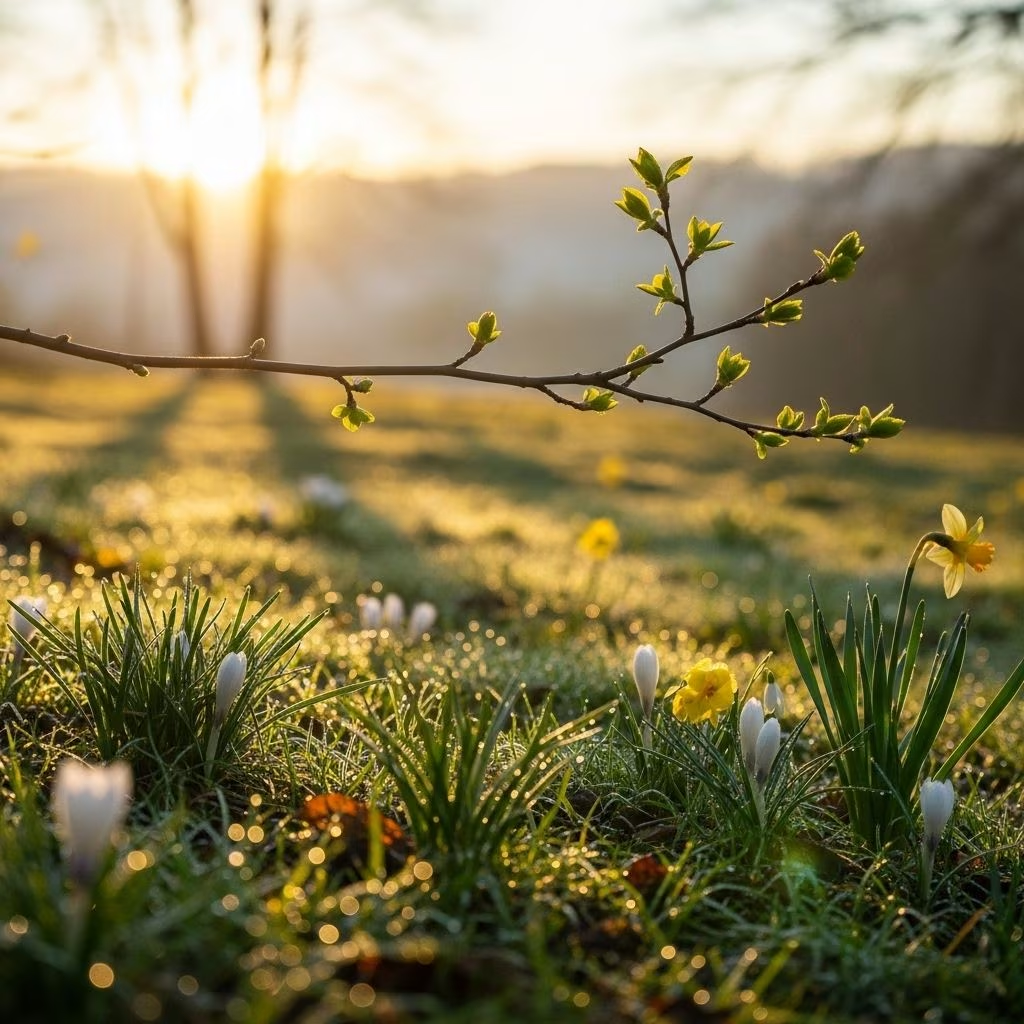
- Trees and plants begin budding as daylight increases and temperatures slowly rise.
- Animals end hibernation and engage in mating rituals, synchronizing to the new season.
- Migratory birds return north, following longer days and warming climates.
FAQs About the 2025 Spring Equinox
Q: What exactly happens during the spring equinox?
A: The sun crosses Earth’s equator moving northward, resulting in nearly equal periods of day and night globally. Earth’s axis is neither tilted toward nor away from the sun.
Q: Why are day and night not always exactly 12 hours each on the equinox?
A: Due to the sun’s apparent size and atmospheric refraction, most locations actually receive a few extra minutes of daylight compared to darkness even on the equinox.
Q: Does the spring equinox always occur on the same date?
A: No, the exact date and time change slightly each year, typically falling between March 19 and March 21, because of Earth’s elliptical orbit and leap year adjustments.
Q: How does the spring equinox affect weather?
A: After the equinox, the Northern Hemisphere gradually gets more sunlight, kickstarting the rise in temperatures typical of spring, although weather can still fluctuate for some weeks.
Q: How is the equinox observed around the world?
A: Cultures globally use the equinox as a marker for holidays, festivals, and for tracking the agricultural cycle, such as Nowruz in Iran, Higan in Japan, and Easter in Christianity.
Astronomical Events Following the Equinox
- Days Continue to Lengthen: The time between sunrise and sunset keeps increasing until the summer solstice in June.
- Nighttime Shrinks: After the equinox, nights get shorter in the Northern Hemisphere.
- Solar Alignment: For several days after the equinox, sunsets and sunrises remain close to due west and east, respectively.
Looking Ahead: Autumnal Equinox and Next Year’s Dates
- The next equinox, the autumnal equinox, will occur on Monday, September 22, 2025, marking the official beginning of fall in the Northern Hemisphere.
- In 2026, the spring equinox will fall on Friday, March 20, at 10:46 a.m. EDT, continuing the centuries-old tradition of seasonal balance.
Conclusion: The Lasting Power of the Equinox
As the Earth continues its journey around the sun, the spring equinox stands as a natural milestone—inviting reflection, celebration, and gratitude for renewal. Whether you mark the day with cultural traditions or simply enjoy the lengthening days, the vernal equinox offers a reminder of the planet’s rhythmic dance and the interconnected cycles of nature and life.
References
- https://www.cbsnews.com/news/first-day-spring-2025-vernal-equinox/
- https://www.timeanddate.com/calendar/spring-equinox.html
- https://www.space.com/the-universe/earth/spring-equinox-2025-say-goodbye-to-winter-in-the-northern-hemisphere-today
- https://abc7ny.com/post/first-day-spring-2025-what-know-seasons-equinox-dates-easter-mothers-memorial/16002678/
- https://www.farmersalmanac.com/spring-equinox-first-day-spring
- https://en.wikipedia.org/wiki/March_equinox
- https://greenwichmeantime.com/longest-day/equinox-solstice-2021-2030/
- https://griffithobservatory.org/event/spring-equinox-2025-sunset/